WordPress Basics: WordPress Settings and Permalinks with NextageDigital Education
WordPress Settings and Permalinks: Hey everyone, in today’s video, we are going to dive into some very essential settings to optimize your website and enhance its functionality. Specifically, we will focus on adjusting your permalinks and exploring your various settings in your WordPress dashboard. Let’s jump right in your WordPress Setting and Permalink with NextageDigital Education!
WordPress stands as the cornerstone of your website creation which offering you a plethora of tools and features to bring your digital vision to life. Among these, understanding WordPress settings and permalinks is very crucial for configuring your website’s functionality and optimizing its structure for search engines and users alike.
In collaboration with NextageDigital Education’s comprehensive WordPress course, we’ll delve into the intricacies of WordPress settings and permalinks, exploring their significance and providing you practical insights on how to configure them effectively to enhance your website’s performance and usability.
Understanding WordPress Settings:
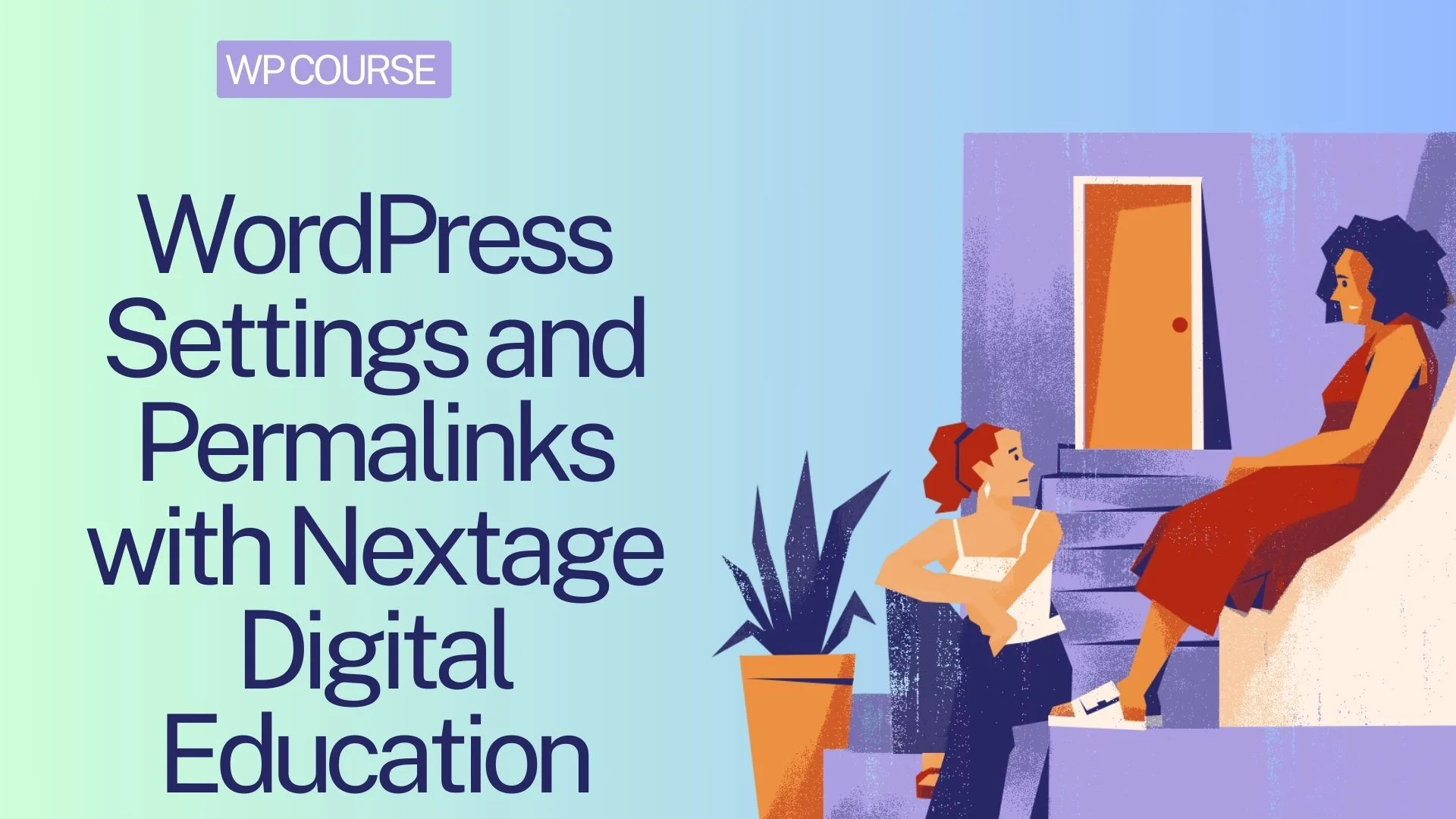
WordPress setting encompass a wide range of configurations that allow you to customize your various aspects of your website’s appearance, behavior and functionality. Accessible through your WordPress dashboard, these settings empower you to tailor your website to suit your specific needs and preferences. Let’s explore some key WordPress setting and their implications:
- General Settings:
- General settings allow you to configure your fundamental aspects of your website, such as website title, tagline, URL structure, time zone and more.
- It’s very essential to ensure that your website title and tagline accurately reflect your website’s purpose and content, as they appear prominently in search engine results and browser tabs.
- Writing Settings:
- Writing settings pertain to the default settings for creating and formatting your blog posts and articles.
- Here, you can specify the default category and post format for your new posts, as well as enable features such as the WordPress visual editor and remote publishing via XML-RPC.
- Reading Settings:
- Reading settings control how your website’s content is displayed to your visitors.
- You can configure your options such as the number of blog posts displayed per page, the format of your website’s homepage (e.g., a static page or latest posts) and whether to display full text or summaries for blog posts in RSS feeds.
- Discussion Settings:
- Discussion settings govern the interaction and engagement features of your website, such as comments and pingbacks.
- You can enable or disable your comments on posts and pages, set default comment settingsand manage comment moderation and notification preferences.
- Permalink Settings:
- Permalinks are permanent URLs that point to your specific pages or posts on your website. Configuring permalinks is very crucial for optimizing your website’s structure for search engines and your users.
- WordPress offers you various permalink structures, including plain, day and name, month and name, numeric, post name and custom structures. The post name permalink structure is recommended for optimal SEO and usability, as it creates descriptive and user-friendly URLs.
Configuring Permalinks for SEO and Usability:
Permalinks play a very critical role in your SEO (Search Engine Optimization) and user experience, as they impact how search engines and your users navigate and understand your website’s content. By configuring your permalinks effectively, you can improve your website’s search engine rankings, enhance click-through ratesand make it easier for users to remember and share your URLs. Here are given some best practices for configuring permalinks:
- Choose your Descriptive Structure: Opt for a permalink structure that includes meaningful keywords related to your content, such as post titles or category names. Avoid generic or cryptic permalinks that provide little context to your users and search engines.
- Use Hyphens to Separate Words: When creating permalink, use hyphens (-) to separate words instead of underscores (_) or spaces. Hyphens are preferred by search engines and ensure readability and compatibility across different platforms and devices.
- Keep Permalinks Short and Sweet: Aim to keep your permalink concise and focused and avoiding unnecessary words or characters. Shorter URLs are easier to read, share and rememberand they tend to perform better in search engine results.
- Avoid Stop Words: Exclude common stop words such as “a,” “an,” “the,” “and,” “of,” and “in” from your permalinks. These words add little value to your URLs and can make them appear cluttered and less relevant to search engines.
- Update Permalinks for Existing Content: If you are changing your permalink structure or updating existing content, be sure to set up proper redirects (301 redirects) to ensure that old URLs redirect to the new ones seamlessly. This helps you to preserve SEO equity and prevents broken links.
Optimizing Permalinks for Better Navigation
First things first, let’s talk about permalinks. Permalinks are the permanent URLs that point to your website’s posts, pages and other content. By default, WordPress generates permalinks based on the post ID and title which can be lengthy and not very user-friendly. But fear not, we can customize them to make them more concise and easy to remember.
Customizing Permalink Structure
To customize your permalinks, head over to your WordPress dashboard, navigate to your “Settings,” and then click on “Permalinks.” Here, you’ll see various permalink structure options to select. I recommend selecting the “Post name” option for simplicity and SEO-friendliness. This structure will display your post title in your URL and making it cleaner and more user-friendly.
Exploring Additional Website Settings
Now that we have optimized our permalinks, let’s explore some other important settings in your WordPress dashboard now.
- General Settings: Here, you can manage basic settings like your site title, tagline and site address. You can also set your preferred date and time format.
- Writing Settings: This section allows you to configure your default post categories and post formats. You can also enable or disable your post via email, although it’s generally not recommended.
- Reading Settings: Here, you can specify whether you want your homepage to display your latest posts or a static page. You can also control your number of posts displayed per page.
- Media Settings: In this section of WP Settings, you can define the sizes for your uploaded images. This ensures that your images are displayed correctly and optimized for your website.
- Discussion Settings: This is where you can manage your settings related to comments on your website. We’ll dive deeper into this in a separate video dedicated to managing your comments and discussions.
Conclusion:
WordPress settings and permalinks play a very pivotal role in shaping your website’s appearance, functionality and search engine visibility. By understanding how to configure these settings effectively, you can optimize your website for maximum performance and usability. With NextageDigital Education’s WordPress course, you can delve deeper into WordPress settings and permalinks, mastering the intricacies of your website customization and optimization.
By optimizing your permalinks and exploring your various settings in your WordPress dashboard, you are well on your way to creating a more user-friendly and efficient website. Stay tuned for our next video class, where we’ll delve into managing your comments and discussions to further enhance your website’s engagement and interaction.
Join us on Social Media Platforms:
- Join us on the Facebook page:
- Join Us on the Linkden Page:
Resolve Microsoft Office Problems
Search Engine Optimization
Seo Checklist
Set Up Cloudflare Cdn
Setup Contact Form 7
Share Usb Printer And Network Printer
Split Long Posts In Blogger
Strategies To Get Noticed On Instagram
Terms Conditions
The Best Keyword Strategies
Transfer Files And Photos From Phone To Pc Wirelessly
Website On The First Page Of Google
What Is Composable Content
Which Pvc Card Printing Hardware Equipment Required
White Label Seo Audit Tools
Windows Cannot Access Your Shared Drive Or Folder
Windows Tools In Windows 11
Wo Mera Nabi Mera Nabi Mera Nabi Hai Little Girl Reciting Naat
Write An Seo Friendly Blog Post
Write Engaging Blog Posts That Rank On Google